Application of Miran KTC1 Linear Displacement Sensor in Automotive Suspension Testing
2026-11-13
In the field of automotive chassis development and testing, the dynamic travel data of the suspension system is a crucial indicator for evaluating vehicle handling, comfort, and safety. How to convert the subtle vibrations transmitted from the road surface into precise electrical signals is a key challenge faced by test engineers. In the latest automotive suspension test bench, the Miran KTC1 linear displacement sensor, with its sturdy structure and high precision performance, has become the "key eye" for capturing the dynamics of the suspension.
From the on-site test images, it can be seen that the Miran KTC1 linear displacement sensor is vertically installed at the core load-bearing point of the suspension system. The main body of the sensor is fixed above the frame/test stand, and the universal joint lever at the bottom of the sensor is closely connected to the lower arm of the suspension (or the hub connection point).
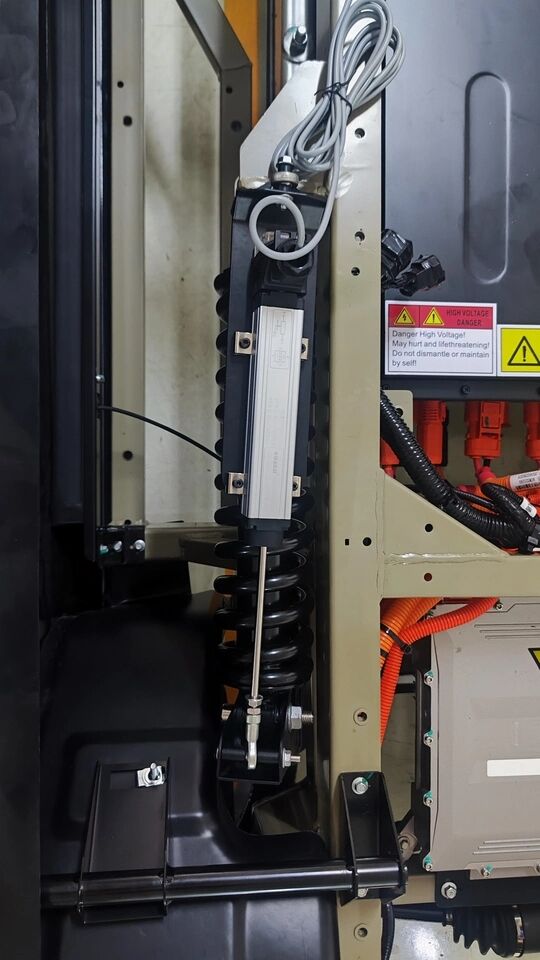
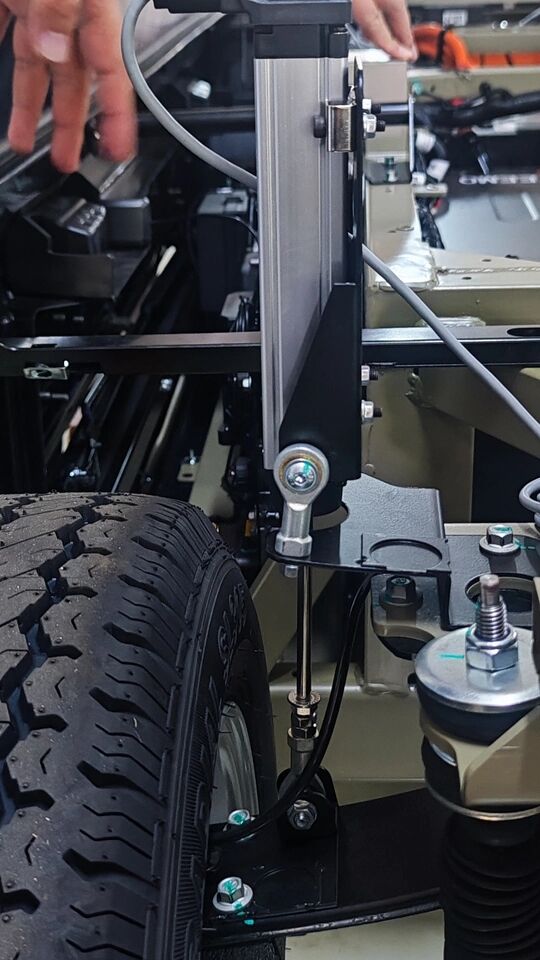
When the test stand simulates different road conditions (such as bumps, side roll, emergency braking) causing the wheels to bounce up and down, the arc-shaped movement of the suspension arm is transformed into a linear displacement of the sensor through the lever. The sensor converts the mechanical displacement into precise analog electrical signals in real time and transmits them to the data acquisition system, thereby accurately drawing out the compression and rebound curves of the suspension.
Why choose Miran KTC1?
Taking into account the engineering requirements at the test site, the Miran KTC1 linear displacement sensor demonstrates the following significant advantages:
Ⅰ.Sturdy and durable, with strong shock resistance: During car suspension tests, there are often high-frequency vibrations and instantaneous impacts. The Miran KTC1 linear displacement sensor adopts an aluminum alloy casing and high-quality stainless steel struts, featuring extremely high mechanical strength and perfectly adapting to the harsh conditions at the position of the chassis shown in the picture.
Ⅱ.Universal joint connection design: The ball joint design clearly visible in the picture effectively eliminates the lateral stress generated by the suspension swing arm during circular motion, ensuring that the sensor only measures linear displacement. This not only guarantees the test accuracy but also extends the service life.
Ⅲ.High protection level: In the face of environmental conditions such as mud, water, and oil stains that the car chassis may encounter,Miran KTC1 linear displacement sensor has excellent dust-proof and water-proof capabilities, ensuring stable output during long-term road tests or bench tests.
In today's automotive industry, which is dedicated to achieving the ultimate driving experience, precise data is the cornerstone of optimization. The Miran KTC1 linear displacement sensor, through its stable performance in on-site suspension tests, not only provides engineers with reliable dynamic travel data, but also validates its outstanding value as an industrial-level measurement tool in the automotive testing field.
The Application of Miran LVDT Displacement Sensor for Ensuring Zero Defect Bolt Assembly at BMW
Application Test of the Miran Pull Wire Displacement Sensor in the LMS Data Acquisition System
Related Article
The Application of Miran LVDT Displacement Sensor for Ensuring Zero Defect Bolt Assembly at BMW
Application Test of the Miran Pull Wire Displacement Sensor in the LMS Data Acquisition System